

Muscle Strain Treatment: Symptom Grading, RICE First Aid, and Recovery Time [Complete Guide 2026]
⚕️ Medical Disclaimer: This article was written by the DR-HO'S health editorial team and reviewed by Dr. Michael Ho (D.C., Canadian Chiropractor, Founder of DR-HO'S). The content is for general health education and information reference only, and does not constitute medical diagnosis, treatment, or prescription advice. If you have persistent pain, discomfort, or health concerns, please consult a registered doctor, physiotherapist, or qualified medical professional. For emergencies, please call 999 immediately or go to the nearest emergency room.
🔗 Explore DR-HO'S Health Knowledge Hub
A muscle strain is a soft tissue injury where muscle fibers are torn due to overstretching or sudden contraction. According to data from the American Academy of Orthopaedic Surgeons (AAOS), muscle strains account for over 30% of all sports injuries, making them the most common type of athletic injury. Whether you're a sports enthusiast, a fitness beginner, or someone who frequently lifts heavy objects, you could experience a muscle strain. Correct immediate treatment and subsequent recovery methods are crucial for a complete recovery. This guide will help you understand the grading of muscle strain symptoms, first aid treatment, and scientific recovery plans.
📋 Table of Contents
- What is a muscle strain? What's the difference from a sprain?
- Muscle Strain Symptoms: A Detailed Explanation of 3 Grades
- 5 Common Causes of Muscle Strain
- RICE First Aid: 4 Immediate Steps After Injury
- Muscle Strain Recovery Timeline
- 6 Effective Ways to Speed Up Recovery
- Preventing Muscle Strains: Pre- and Post-Exercise Precautions
- When Should You See a Doctor?
- Muscle Strain Frequently Asked Questions (FAQ)
- Conclusion

What is a muscle strain? What's the difference from a sprain?
A muscle strain is an injury to a muscle or the tendon (which connects muscle to bone) due to overstretching, resulting in micro-tears or even a complete rupture. The main difference between a muscle strain and a sprain is that a strain affects muscles and tendons, while a sprain affects ligaments—the connective tissues that connect bones to other bones.
Common areas for muscle strains include:
- Hamstring — Most common injury during running and jumping
- Lower back muscles — Common when lifting heavy objects with incorrect posture
- Calf muscles — Easily strained during sudden acceleration or changes in direction
- Shoulder muscles — Occurs with throwing motions or excessive weight training
- Neck muscles — Caused by sudden twists or prolonged poor posture
Understanding the location and severity of the strain is the first step in choosing the correct treatment method.
Muscle Strain Symptoms: A Detailed Explanation of 3 Grades
Muscle strains are classified into 3 grades based on severity, with distinct differences in symptoms, pain levels, and recovery times for each. According to the classification standards of the British Journal of Sports Medicine (2023), accurately identifying the grade of the strain can help you adopt the correct treatment approach.
| Grade | Degree of Injury | Symptoms | Mobility | Recovery Time |
|---|---|---|---|---|
| Grade 1 (Mild) | Less than 5% muscle fiber tear | Mild pain, localized tightness, slight swelling | Normal activity possible but with discomfort | 1-3 weeks |
| Grade 2 (Moderate) | Partial muscle fiber tear | Obvious pain, swelling, bruising, tenderness | Restricted movement, pain worsens with effort | 3-8 weeks |
| Grade 3 (Severe) | Complete muscle rupture | Severe pain, significant swelling and bruising, palpable indentation | Unable to use the injured muscle | 3-6 months |
Self-assessment method: If you can still walk or move normally after the injury, it's usually a Grade 1 strain. If there's obvious swelling and bruising, and movement is restricted, it might be Grade 2. If you hear a "pop" and cannot move the injured part at all, it could be Grade 3, requiring immediate medical attention.

5 Common Causes of Muscle Strain
Muscle strains usually occur when a muscle is subjected to stress beyond its capacity. The following 5 are the most common causes, and understanding them can help with targeted prevention.
1. Insufficient Warm-up
Not warming up sufficiently before exercise is the primary cause of muscle strains. According to research by the American College of Sports Medicine (ACSM), proper warm-up can reduce the risk of muscle strain by up to 50%. Cold muscles have poor elasticity and are prone to tears during sudden strenuous exercise.
2. Overuse
Repeating the same movement or suddenly and significantly increasing training volume can lead to muscle fatigue accumulation, eventually causing a strain. This is common in sports that involve repetitive movements, such as running, swimming, and tennis.
3. Muscle Imbalance
A significant strength imbalance between opposing muscle groups (e.g., strong quadriceps but weak hamstrings) increases the risk of strain. Studies show that the strength ratio between the quadriceps and hamstrings should be maintained between 60:40 and 70:30.
4. Incorrect Posture
Bending at the waist instead of the knees when lifting heavy objects, incorrect exercise form, and prolonged poor sitting posture leading to muscle tension are all common causes of strains. Correct movement patterns can effectively prevent most strains.
5. Insufficient Flexibility
Poor muscle flexibility means a limited range of motion for stretching. When this range is exceeded, tears are more likely to occur. Regular stretching exercises can effectively increase muscle flexibility and reduce the risk of strains.
RICE First Aid: 4 Immediate Steps After Injury
The RICE first aid method is the most widely recognized immediate treatment for muscle strains, standing for Rest, Ice, Compression, and Elevation. Correctly implementing RICE within 48-72 hours of injury can effectively control swelling, reduce internal bleeding, and accelerate recovery.
R — Rest
Immediately stop any activity that causes pain and avoid using the injured muscle. However, "rest" doesn't mean complete immobility—you can do light activities that don't cause pain to maintain blood circulation.
I — Ice
Apply ice as soon as possible after the injury, for 15-20 minutes each time, every 2-3 hours. Ice constricts blood vessels, reducing swelling and internal bleeding. Be careful not to apply ice directly to the skin; use a towel to wrap it.
C — Compression
Wrap the injured area with an elastic bandage to help control swelling. The bandage should be snug but not too tight—too tight will affect blood circulation, while too loose will be ineffective. If you feel numbness, discoloration, or increased pain in the limb, loosen the bandage immediately.
E — Elevation
Elevate the injured limb to a position above heart level to use gravity to help reduce swelling. Especially when sleeping, you can use pillows to prop up the injured arm or leg.
⚠️ Important Reminder: Avoid the following actions within 48 hours of injury (HARM principle): Heat, Alcohol, Running/activity, Massage. These actions increase blood flow, worsening swelling and internal bleeding.
Muscle Strain Recovery Timeline
Muscle strain recovery time depends on the grade of the injury, the injured area, and individual body type. The following timeline provides a general reference to help you understand the recovery progress at each stage.
| Recovery Phase | Time Frame | Physical Changes | Recommended Actions |
|---|---|---|---|
| Acute Phase | 0-72 hours post-injury | Most severe swelling and pain | Strictly follow RICE, avoid HARM |
| Subacute Phase | 3-14 days | Swelling subsides, tissue begins to repair | Begin light activity, can switch to heat therapy |
| Repair Phase | 2-6 weeks | New tissue formation, gradual strength recovery | Progressive strengthening exercises, physical therapy |
| Remodeling Phase | 6 weeks-6 months | Tissue strength restored to near pre-injury level | Gradually return to full intensity exercise |
Note: Returning to high-intensity exercise too early is the main reason for muscle strain recurrence. According to statistics, the recurrence rate within 2 months after the first strain is as high as 30%, primarily due to incomplete recovery and rushing back to exercise.

6 Effective Ways to Speed Up Recovery
In addition to basic RICE first aid, the following 6 methods can help accelerate the muscle strain recovery process and shorten recovery time.
Method 1: Progressive Stretching
After the acute phase (usually 3-5 days post-injury), begin light stretching exercises. The stretch intensity should be guided by "feeling a slight pull but no pain," holding each stretch for 15-30 seconds, 3-5 times daily. Gradually increasing the range of motion helps the newly formed tissue align properly, improving muscle flexibility.
Method 2: TENS Electrotherapy for Pain Relief
TENS (Transcutaneous Electrical Nerve Stimulation) is an FDA-approved non-pharmacological pain relief method. It sends micro-currents to the injured area via electrodes, stimulating the body to release endorphins, effectively relieving muscle strain pain. DR-HO'S electrotherapy products combine TENS and EMS (Electrical Muscle Stimulation) technology, which not only relieves pain but also promotes muscle relaxation and blood circulation, accelerating recovery.
- Dr. HO'S Pain Therapy System — Suitable for muscle strain pain relief and recovery in all body parts
- DR-HO'S Triple Action Back Belt — Specifically designed for lower back muscle strains, providing stable support and electrotherapy pain relief
Method 3: Contrast Therapy (Hot and Cold)
After the acute phase (approximately 48-72 hours), you can begin contrast therapy. First, apply heat for 10 minutes (to promote blood circulation), then cold for 5 minutes (to control swelling). Alternate these for 2-3 cycles. This method can effectively promote the removal of metabolic waste and accelerate tissue repair.
Method 4: Progressive Strength Training
Once the pain has significantly reduced, begin low-resistance strength training, gradually increasing the load. Initially, you can use resistance bands for isometric exercises, then slowly transition to dynamic training. The goal is to restore the injured muscle to over 90% of its pre-injury strength before returning to sports.
Method 5: Massage for Relief
After the subacute phase (7 days post-injury), gentle massage can help improve blood circulation and reduce muscle adhesions. You can use professional massage devices for assistance:
- DR.HO'S Shiatsu Back Massager — Deep shiatsu massage to help relax tight lower back muscles
- DR-HO'S MotionSolution Mat for Neck and Back — Full-body massage to promote blood circulation and aid recovery
Method 6: Nutritional Supplements
Adequate intake of protein (1.2-1.7g/kg body weight daily) provides the raw materials needed for muscle repair. Supplementing with Vitamin C (promotes collagen synthesis), Omega-3 fatty acids (reduces inflammation), and zinc (promotes wound healing) can also be beneficial.
Preventing Muscle Strains: Pre- and Post-Exercise Precautions
The most effective way to prevent muscle strains is to establish correct exercise habits. Here are key prevention tips for before, during, and after exercise.
Before Exercise
- Thorough Warm-up: At least 10-15 minutes of dynamic warm-up, including light jogging, high knees, jumping jacks, etc., to raise muscle temperature and increase blood flow.
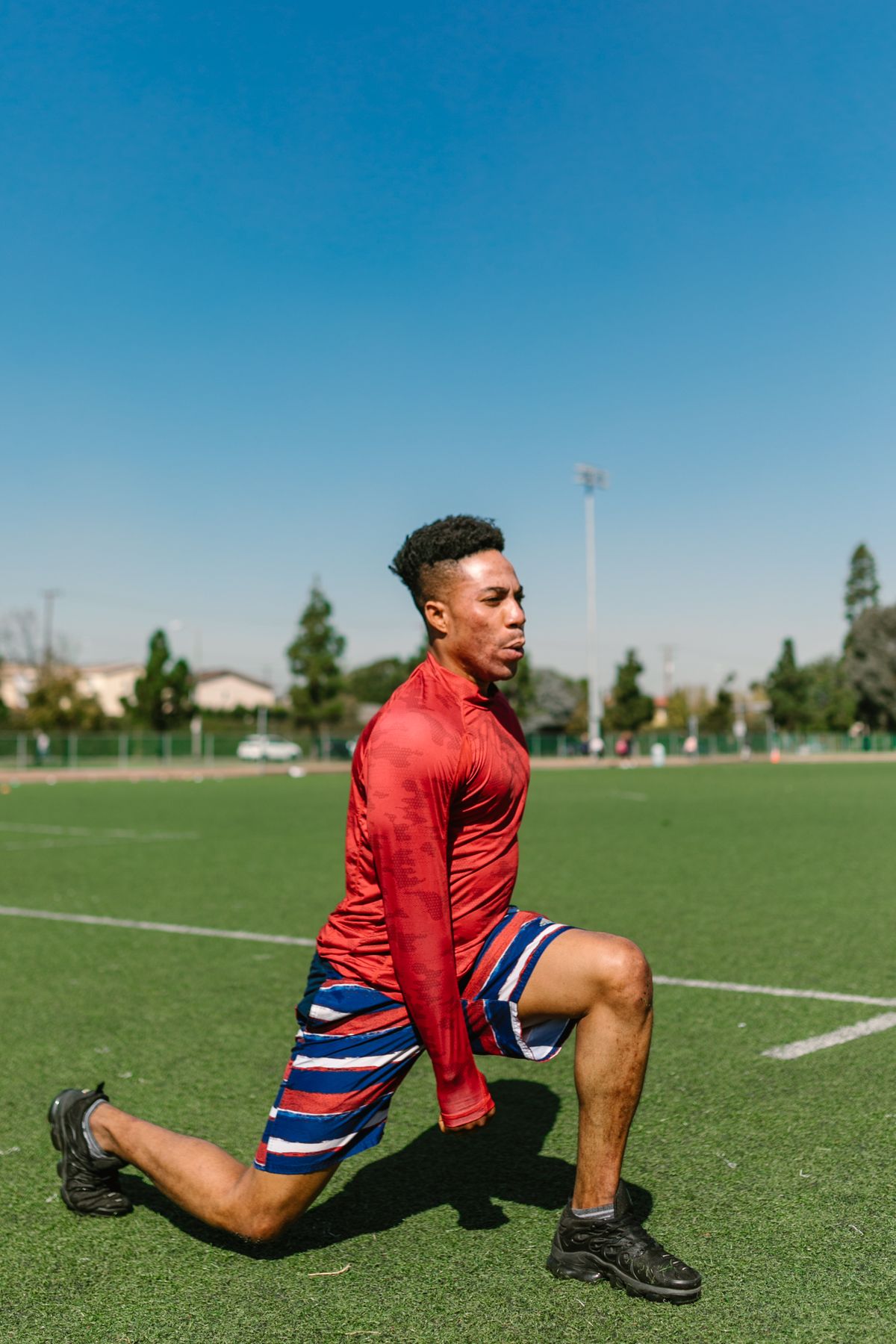
- Dynamic Stretching: Perform dynamic stretches (e.g., leg swings, lunges), avoid static stretching—research shows static stretching before exercise can actually reduce muscle strength.
- Assess Physical Condition: If you feel fatigued or have an old injury that hasn't fully recovered, you should reduce your exercise intensity.
During Exercise
- Progress Gradually: Do not increase weekly training volume by more than 10% (the 10% rule).
- Pay Attention to Form: Especially during weight training, incorrect posture is a primary cause of strains.
- Rest When Needed: Take breaks when you feel muscle fatigue, do not push through.
After Exercise
- Static Stretching: Perform 10-15 minutes of static stretching after exercise, holding each stretch for 15-30 seconds.
- Ample Rest: Ensure muscle groups have at least 48 hours of recovery time before training the same area again.
- Nutritional Supplementation: Consume protein and carbohydrates within 30 minutes after exercise to aid muscle repair.
When Should You See a Doctor?
Most Grade 1 muscle strains can be managed and recover on their own, but you should seek medical attention promptly if any of the following occur:
- You heard a "pop" sound at the time of injury.
- There is a noticeable indentation or deformity in the injured area.
- The pain is severe enough that you are completely unable to move the injured limb.
- Swelling and bruising continue to worsen instead of gradually subsiding.
- Your condition does not improve or even worsens after 48 hours post-injury.
- You experience numbness or tingling in the injured area (which may indicate nerve damage).
- You repeatedly strain the same area.
A doctor may order an ultrasound or MRI (Magnetic Resonance Imaging) to assess the extent of the damage. Severe Grade 3 strains may require surgical repair. If your lower back muscle strain is accompanied by radiating leg pain, you should seek medical attention even sooner to rule out issues like sciatica.
Muscle Strain Frequently Asked Questions (FAQ)
Can I continue to exercise with a muscle strain?
With a mild Grade 1 strain, you can perform light activities that don't cause pain, but you should avoid movements that do cause pain. For Grade 2 and Grade 3 strains, you must stop exercising and wait for a doctor's assessment before deciding when to resume. The general rule is: if a movement causes pain, do not do it.
Should I use ice or heat for a muscle strain?
Within 48-72 hours of injury, use ice to help control swelling and internal bleeding. After 72 hours, if the swelling has subsided, you can switch to heat therapy to promote blood circulation and muscle relaxation. Using heat during the acute phase can worsen swelling and is a common mistake.
How long does a muscle strain take to heal?
Depending on the severity: a mild Grade 1 strain takes about 1-3 weeks, a moderate Grade 2 strain takes about 3-8 weeks, and a severe Grade 3 strain may require 3-6 months. Correct first aid and recovery methods can effectively shorten the recovery time.
Can I massage a muscle strain?
Do not massage the injured area for the first 3-5 days, as massage can increase blood flow and worsen swelling and internal bleeding. After 5-7 days, if swelling has subsided, you can begin gentle massage to help improve blood circulation and reduce muscle adhesions.
What's the difference between a muscle strain and muscle soreness?
Muscle soreness (DOMS) usually appears 24-72 hours after exercise as delayed onset muscle soreness, which is a normal physiological response and will subside on its own. A muscle strain, however, involves immediate severe pain, accompanied by swelling or bruising, and does not resolve on its own, requiring active treatment.
How do I differentiate between a muscle strain and a bone fracture?
Pain from a muscle strain is concentrated in the muscle or tendon area, with tenderness upon pressing the muscle. Pain from a fracture is concentrated in the bone area, may involve limb deformity, and causes sharp pain when the bone is lightly tapped. If a fracture is suspected, seek immediate medical attention for an X-ray.
Do I need to take painkillers for a muscle strain?
Mild strains usually don't require painkillers. If the pain affects daily life, you can take over-the-counter painkillers (such as Ibuprofen) for a short period, but long-term reliance is not recommended. DR-HO'S TENS electrotherapy pain relief devices are drug-free pain relief alternatives, suitable for long-term home use.
Conclusion
While muscle strains are common, most can fully recover with proper treatment. Remember these key points:
- Immediate RICE First Aid: Strictly follow within 48-72 hours of injury.
- Accurate Grade Assessment: For Grade 2 or higher, seek medical evaluation.
- Patient Recovery: Avoid resuming high-intensity exercise too early to prevent recurrence.
- Scientific Rehabilitation: Progressive stretching, strength training, and TENS electrotherapy can accelerate recovery.
- Prevention is Key: Thorough warm-up, gradual progression, and regular stretching are the most effective prevention methods.
If you frequently experience muscle strains or are bothered by pain, DR-HO'S professional electrotherapy products can help you achieve effective pain relief and recovery treatment at home, reducing reliance on painkillers.