

Back Pain: Causes, Relief, and Complete Guide 2026
⚕️ Medical Disclaimer: This article was written by the DR-HO'S health editorial team and reviewed by Dr. Michael Ho (D.C., Canadian Chiropractor, Founder of DR-HO'S). The content is for general health education and information reference only, and does not constitute medical diagnosis, treatment, or prescription advice. If you experience persistent pain, discomfort, or health concerns, please consult a registered doctor, physical therapist, or qualified healthcare professional. In an emergency, please call 999 immediately or go to the nearest emergency room.
🔗 Explore DR-HO'S Health Knowledge Center
According to data from the Hong Kong Department of Health, over 80% of adults experience back pain at least once in their lifetime, and for office workers, back and lower back pain is the leading health concern. Whether you experience sudden upper back pain, lower back pain from prolonged sitting, or chronic backaches, this guide will provide you with comprehensive, professional answers, from causes and location diagnosis to relief solutions.
Back pain refers to discomfort and pain along the spine and surrounding muscles, ligaments, and nerves, which can cover the upper back, mid-back, and lower back. It is one of the leading causes of disability globally (The Lancet, 2018).
📑 Table of Contents

Back Pain Location Chart: Where Does It Hurt?
Different lower back pain locations often point to different causes. Accurately identifying the pain point is the first step to finding the correct treatment.
| Back Pain Location | Common Description | Possible Causes | Risk Level |
|---|---|---|---|
| Upper Back Middle Pain | Pain between shoulder blades, upper back pain | Poor posture, thoracic facet joint issues, myofascial tension | ⚠️ Moderate |
| Sudden Upper Back Pain | Acute stabbing pain, worsening with activity | Muscle strain, acute sprain, stress fracture | 🔴 Requires early attention |
| Mid-back Pain | Back muscle pain, aching sensation | Lumbar muscle strain, disc problems | ⚠️ Moderate |
| Lower Back Pain | Low back pain, worse when bending over | Herniated disc, lumbar muscle strain, spinal degeneration | 🔴 Common but requires attention |
| Flank Pain | Unilateral or bilateral lower back pain | Kidney problems, muscle imbalance | 🔴 Internal organ issues need to be ruled out |
Important Note: If your back pain is accompanied by fever, sudden weight loss, leg weakness, or incontinence, seek immediate medical attention.
7 Major Causes of Back and Lower Back Pain Explained
Understanding the causes of back pain is fundamental to effective treatment. Here are the seven most common causes of back and lower back pain among Hong Kong people, ranked by frequency based on clinical data.
1. Poor Posture and Lower Back Pain from Prolonged Sitting
Lower back pain from prolonged sitting is the most common cause of back pain for office workers in Hong Kong. Maintaining poor posture for extended periods puts extra pressure on the spine, leading to lower back pain.
- Office workers who sit for more than 8 hours a day have a 40% increased risk of back pain (Hong Kong Medical Journal, 2022)
- Looking down at a mobile phone puts an additional 20-27 kg of pressure on the cervical spine, also affecting upper back pain
- Crossing legs can lead to pelvic tilt, exacerbating back and lower back pain
2. Muscle Strain and Back Muscle Pain
Back muscle pain is usually caused by overuse or sudden exertion and is the most common cause of sudden upper back pain.
- Incorrect posture when lifting heavy objects
- Lack of warm-up before exercise
- Repetitive movements (e.g., housework, moving goods)
- Improper sleeping posture
3. Disc Problems
Herniated or degenerated discs are significant structural causes of chronic back and lower back pain, common in people aged 30-50.
- Herniated discs can compress nerve roots, causing radiating leg pain (sciatica)
- Disc degeneration worsens with age
- Long-term poor posture accelerates disc wear and tear
4. Spinal Degenerative Diseases
As we age, spinal joints and discs naturally degenerate, which is a major cause of back pain in people over 50.
5. Stress and Emotional Factors
Chronic stress leads to continuous muscle tension, especially affecting upper back middle pain and backaches. People with anxiety are 2.5 times more likely to experience back pain than the general population.
6. Lack of Exercise and Weak Core Muscles
Core muscles act as a "natural back brace" supporting the spine. Insufficient muscle strength directly increases the risk of lower back pain.
7. Disease-Related Back Pain
Some causes of back and lower back pain involve internal medicine or immune system diseases, requiring professional medical diagnosis.
- Ankylosing spondylitis (more common in young males)
- Osteoporosis (postmenopausal women are at high risk)
- Kidney stones or urinary system problems
5 Effective Methods for Relieving Back and Lower Back Pain [Evidence-Based]
Relief for back and lower back pain requires a combination of methods. The following five methods are supported by clinical research for their effectiveness.
Method One: Stretching Exercises (Can be done at home)

Stretching is one of the most economical and convenient ways to relieve backaches. Regular stretches for lower back pain can effectively increase spinal flexibility and reduce muscle tension.
Recommended 4 sets of stretches for lower back pain:
- Cat-Cow Stretch — On all fours, arch your back as you inhale, and let your belly drop as you exhale, 10 repetitions each, 2-3 sets daily. Targets: general back pain, back muscle pain.
- Child's Pose — Sit on your heels and extend your upper body forward, reaching your hands to the floor, hold for 30 seconds, repeat 3 times. Targets: lower back pain, backaches.
- Knee-to-Chest — Lie on your back, pull one knee towards your chest, hold for 20 seconds, then switch sides. Targets: back and lower back pain, lower back pain from prolonged sitting.
- Seated Spinal Twist — Sit, cross one leg over the other, and twist your upper body towards the crossed leg, hold for 20 seconds. Targets: upper back middle pain, mid-back stiffness.
Tip: Perform stretches slowly. You should feel a "stretch," but avoid forcing through pain. During acute back pain episodes (first 48 hours), it's recommended to rest first, then begin stretching once the pain subsides.
Method Two: Hot and Cold Therapy
Heat therapy is a traditionally effective method for relieving chronic backaches, while cold therapy is suitable for acute injuries.
| Condition | Recommended Method | Duration | Principle |
|---|---|---|---|
| Acute back pain (first 48 hours) | Cold compress | 15-20 minutes each time | Reduces inflammation and swelling |
| Chronic backaches | Hot compress | 20-30 minutes each time | Promotes blood circulation, relaxes muscles |
| Back muscle pain (after exercise) | First cold, then hot | 15 minutes each | First anti-inflammatory, then repair |
Research shows that sustained low-level heat therapy (approx. 40°C) combined with far-infrared technology can penetrate the skin's surface to reach deep muscle tissues, more effectively relieving back and lower back pain than traditional hot compresses (Journal of Pain Research, 2021). DRHO'S Pain Therapy System utilizes this technology, combining the dual effects of TENS electrical stimulation and heat therapy to provide users with professional-grade at-home back pain care solutions.
Method Three: Improve Daily Posture
Correcting posture is a fundamental way to prevent and relieve lower back pain from prolonged sitting.
- Screen Position: Top of the screen at eye level, about an arm's length away.
- Chair Adjustment: Feet flat on the floor, knees at a 90-degree angle.
- Lumbar Support: Use a lumbar pillow or rolled-up towel to support the natural curve of the lower back.
- Regular Standing: Stand up and move around for 5 minutes every 45-60 minutes.
- Mobile Phone Use: Raise the phone to eye level to reduce looking down.
For users suffering from chronic lower back pain, DRHO'S 2-in-1 Back Relief offers a portable daily care option, providing targeted support and relief for the lower back in office or home environments.
Method Four: Strengthen Core Muscles
Strengthening core muscles is the most effective long-term strategy for preventing recurrence of back and lower back pain.
- Plank — Start with 15 seconds, gradually increasing to 60 seconds.
- Bridge — Lie on your back, lift your hips, hold for 10 seconds, repeat 10 times.
- Dead Bug — Lie on your back and alternately extend opposite arm and leg, 8 repetitions per side.
- Swimming — Lie on your stomach and alternately lift opposite arm and leg, 10 repetitions per side.
A systematic review published in BMJ found that core stabilization training lasting more than 8 weeks can reduce the recurrence rate of chronic back and lower back pain by 25-40%.
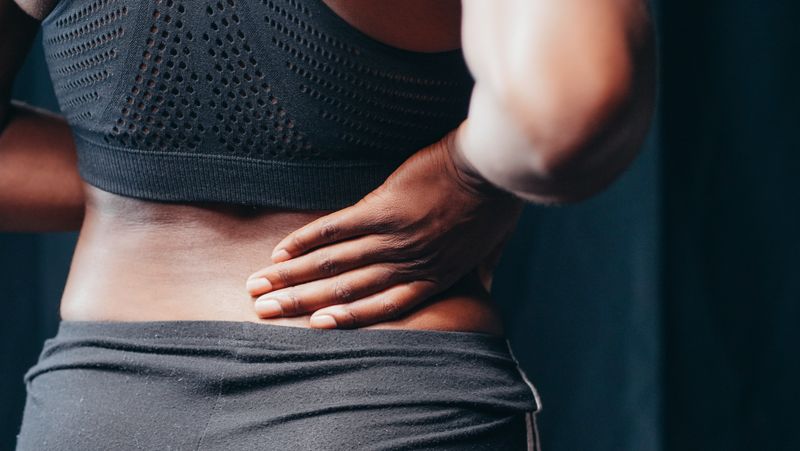
Method Five: Professional Physical Therapy and Technological Aids
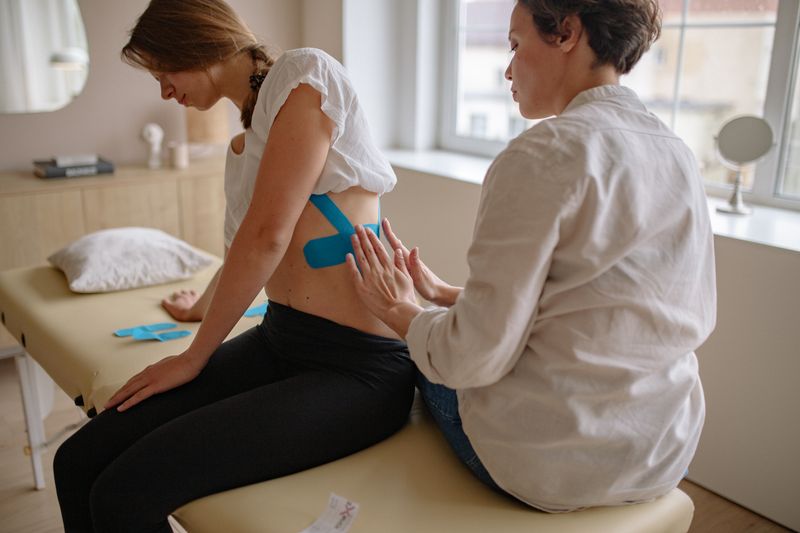
When back pain lasts for more than 2 weeks or significantly impacts daily life, it's recommended to seek professional help.
- Physical Therapy: Manual therapy, ultrasound, interferential current therapy.
- Acupuncture: A World Health Organization-recognized method for back pain treatment.
- Spinal Correction: Suitable for back pain caused by spinal misalignment.
- TENS Electrotherapy (Transcutaneous Electrical Nerve Stimulation): Blocks pain signals through low-frequency electrical pulses.
DRHO'S Pain Therapy System and Decompression Belt are designed for at-home pain management needs, allowing users to enjoy professional-grade pain management at home.
When to See a Doctor? Red Flag Warnings for Back Pain
- 🔴 Back pain accompanied by fever or unexplained weight loss
- 🔴 Numbness, weakness, or difficulty walking in the lower limbs
- 🔴 Abnormal bowel or bladder function
- 🔴 Back pain that worsens with rest or at night
- 🔴 History of cancer with new onset back pain
- 🔴 Severe back pain after an injury
- 🔴 Back pain lasting more than 6 weeks with no improvement
Real User Experience Sharing
Mr. Chan, 42, Finance Industry, Central
“I've been a banker for over ten years, constantly in front of a computer, and back and lower back pain has become part of my daily life. Then I started doing 15 minutes of stretching exercises every day, combined with using DRHO'S pain therapy system at home for heat therapy and TENS electrotherapy. After three months, my back pain significantly reduced.”
Mrs. Lee, 56, Homemaker, Sha Tin
“As I've gotten older, I'm always aching all over, especially my lower back and upper back. My daughter bought me DRHO'S 2-in-1 Back Relief, and I use it for a while every day. My backaches feel much better.”
(The above are genuine user feedback; individual results may vary depending on physique.)
Related Product Recommendations
- DR-HO'S Lumbar Pain Relief Belt — Specifically designed for lower back pain, three-in-one pain relief + back support + decompression.
- DR-HO'S Pain Therapy System — TENS+EMS dual-effect electrotherapy, suitable for whole body.
- DR-HO'S Cervical & Lumbar Massage Mat — Full-body acupressure massage to relieve muscle tension.
- DR-HO'S Back Massager — Deep shiatsu massage, targeting back and lower back aches.
Further reading: What to do about heel pain and sole pain? 7 causes and 5 relief tips [2026 Complete Guide]
Frequently Asked Questions FAQ
Q1: Can back pain go away on its own?
Most acute back pain can improve on its own within 2-6 weeks. It's recommended to maintain moderate activity, avoid prolonged bed rest, and use back and lower back pain relief methods like stretching and hot compresses to speed up recovery. If back pain lasts more than 6 weeks, it's advisable to see a doctor for examination.
Q2: Should I sleep on a hard or soft bed for back and lower back pain?
Research shows that a medium-firm mattress is most ideal for people with back and lower back pain. A mattress that is too hard cannot conform to the natural curve of the spine, while one that is too soft lacks sufficient support.
Q3: Should I rest or exercise when I have back pain?
Modern medicine recommends avoiding complete bed rest. For acute back pain, appropriate rest for the first 24-48 hours is acceptable, but light activity should resume as soon as possible thereafter. Prolonged bed rest can actually lead to muscle atrophy, exacerbating back and lower back pain.
Q4: How can I immediately relieve lower back pain from prolonged sitting?
Immediate relief methods for lower back pain from prolonged sitting include: standing up for 2-3 minutes of gentle stretching; performing pelvic tilts while seated; gently rolling a tennis ball on the painful spots; and adjusting your sitting posture to ensure lumbar support. In the long term, standing up to move around once every 45 minutes is the most effective habit for preventing lower back pain from prolonged sitting.
Q5: What causes upper back middle pain?
The most common cause of upper back middle pain is strain on the rhomboid and trapezius muscles due to prolonged rounded shoulders and hunchback posture. In a few cases, upper back pain may also be related to heart or chest problems; if accompanied by chest tightness or difficulty breathing, seek immediate medical attention.
Q6: Is TENS electrotherapy effective for back pain?
TENS (Transcutaneous Electrical Nerve Stimulation) has been proven effective in relieving chronic back and lower back pain by multiple clinical studies. Its principle is to stimulate nerve fibers with low-frequency electrical pulses, blocking pain signals from reaching the brain, and simultaneously promoting the release of the body's endorphins.
Q7: Is back pain always a bone problem?
No. Approximately 85% of back pain is "non-specific back pain," mostly related to muscle tension, ligament strain, poor posture, and psychological stress. Only a small percentage of back pain (about 5-10%) involves structural issues like herniated discs.
Summary: Golden Rules for Back Pain Management
- Keep moving — Do at least 15 minutes of stretching and core training daily.
- Sit properly — Pay attention to daily posture, avoid prolonged sitting.
- Know how to manage — Utilize technology such as hot compresses and TENS for daily care.
- Know when to see a doctor — Seek medical attention early if red flag symptoms appear.
Back and lower back pain is not a simple problem that will "just go away if you tough it out." By taking early action and combining correct knowledge with effective tools, most back pain can be significantly improved.
Author: DRHO Health Team
The DRHO Health Team consists of registered physical therapists, exercise science experts, and health technology engineers, dedicated to providing Hong Kong citizens with evidence-based pain management information and innovative solutions.
Disclaimer: The content of this article is for health education and informational purposes only and does not constitute any medical diagnosis or treatment advice. Everyone's physical condition is different; if you have any health concerns or persistent back pain, please consult a qualified healthcare professional. The products mentioned in this article are supplementary health care tools and cannot replace professional medical diagnosis and treatment.
Last updated: March 2026
1 comment
Great insights on acute pain management. Acting fast during sudden flare-ups really makes a difference. For Canadians looking for more detailed guidance, I’ve found https://painrxcanada.com/ to be a helpful local resource.