

What to do About Foot Pain? 8 Common Causes and Solutions for Sole Pain [2026 Hong Kong Plantar Care Guide]
⚕️ Medical Disclaimer: This article was written by the DR-HO'S health editorial team and reviewed by Dr. Michael Ho (D.C., Canadian Chiropractor, Founder of DR-HO'S). The content is for general health education and informational purposes only, and does not constitute medical diagnosis, treatment, or prescription advice. If you experience persistent pain, discomfort, or have health concerns, please consult a registered doctor, physical therapist, or qualified medical professional. In an emergency, please call 999 immediately or go to the nearest emergency room.
🔗 Explore DR-HO'S Health Knowledge Center
What to do about foot pain? Hong Kong people stand 8-10 hours a day for work, hike 20 kilometers round trip, or office ladies wear high heels to catch buses, putting long-term pressure on their feet. Pain in the middle of the sole, pain on the outside of the foot, and pain in the forefoot have almost become urban diseases. According to data from the Hong Kong Podiatry Association, 1 in 5 adults in Hong Kong suffers from chronic foot pain, with nearly 60% related to plantar fasciitis and bunions.
This guide, compiled by the DR-HO'S Hong Kong team, covers 5 common locations of foot pain + 8 common causes + 7 self-relief methods + Hong Kong medical resources, to help you accurately determine the type of foot pain and choose the most suitable treatment method. If you have been relying on painkillers for a long time, you should consider drug-free TENS electrotherapy solutions.
📋 Table of Contents
- What is foot pain? The 5 most common locations for Hong Kong people
- 8 common causes of foot pain
- How to distinguish between "muscle pain" vs "nerve pain" vs "bone pain"?
- 7 self-relief methods for foot pain
- TENS Electrotherapy: How DR-HO'S Circulation Promoter improves foot pain
- Where to seek treatment for foot pain in Hong Kong? Medical resources + fees
- 6 warning signs for medical attention: When to see a doctor for foot pain?
- Preventing foot pain: 5 daily habits
- Frequently Asked Questions FAQ
What is foot pain? The 5 most common locations for Hong Kong people
Foot pain (plantar pain) refers to pain or discomfort in any part of the bottom of the foot, toes, heel, or top of the foot. Unlike heel pain or toe pain, foot pain encompasses a wider area, covering the entire plantar structure. Accurately identifying the location of the pain is the first step in finding the cause.

1. Mid-sole pain
Location: The arched part in the center of the foot (arch area).
Common causes: Plantar fasciitis, flat feet, high arches, prolonged standing.
Typical symptoms: Severe pain with the first step out of bed in the morning, worsening after prolonged standing, tenderness when pressing the arch.
2. Outer foot pain
Location: Outer edge of the foot (from the outside of the little toe to the outside of the heel).
Common causes: Fifth metatarsal stress fracture, peroneal tendinitis, compensatory pain from old ankle injuries (post-sprain sequelae).
Typical symptoms: Persistent dull pain on the outside when walking, worsening when running, localized tender spots when pressed.
3. Forefoot pain (metatarsalgia)
Location: Below the base of the five toes (the front 1/3 of the foot).
Common causes: Metatarsalgia, Morton's Neuroma, prolonged wearing of high heels.
Typical symptoms: Feeling like stepping on a small stone in the forefoot, numbness, burning sensation.
4. Heel pain
Location: Bottom of the heel.
Common causes: Plantar fasciitis, Achilles tendinitis, heel spurs.
👉 Detailed treatment: See the complete guide to heel pain
5. Toe pain
Location: Joints of the five toes or the nail area.
Common causes: Gout, bunions, ingrown toenails, degenerative arthritis.
👉 Detailed treatment: See the guide to 7 causes of toe pain
8 common causes of foot pain

Cause 1: Plantar Fasciitis — Most common
The plantar fascia is a thick band of tissue connecting the heel bone to the toes. Prolonged pressure can lead to inflammation, causing severe pain from the bottom of the arch to the inner heel, especially painful with the first step in the morning. Most common among Hong Kong hikers, runners, salespersons, and chefs who stand for long periods.
- Typical pain points: Inner arch, front of the heel
- Recovery time: 6-18 months (requires treatment)
- Recurrence rate: High, about 30-40%
Cause 2: Metatarsalgia
The five metatarsal bones bear weight in the forefoot. Wearing high heels, running, obesity, and flat feet can cause excessive pressure on the metatarsal heads, leading to inflammation, burning sensation, and feeling like stepping on a stone in the forefoot. Particularly common among Hong Kong office ladies and flight attendants.
Cause 3: Morton's Neuroma
Nerve thickening between the third and fourth toes due to prolonged pressure. Typical symptoms: Burning pain, numbness, and electric shock-like sensation in the forefoot, which immediately worsens when wearing narrow shoes or high heels. Incidence in middle-aged women is 8-10 times higher than in men.
Cause 4: Bunion
Hallux valgus is a deformity where the big toe joint protrudes outwards. The incidence rate in Hong Kong women is as high as 23% (one of the highest in Asia). Besides cosmetic issues, it can cause redness, swelling, pain in the big toe joint, and friction with other toes. Long-term wearing of high heels and narrow-toed shoes is the main cause.
Cause 5: Flat Feet / High Arches
Collapsed arches (flat feet) or excessively high arches (high arches) can both alter the weight distribution in the foot, leading to chronic fatigue pain in the plantar fascia, Achilles tendon, and metatarsals. Approximately 20-30% of adults in Hong Kong have varying degrees of arch abnormality.
Cause 6: Gout
Uric acid crystals accumulate in joints, most commonly affecting the big toe joint. During an attack, the joint becomes red, swollen, hot, and severely painful (even a bedsheet brushing against it can be painful). The incidence rate in Hong Kong men over 40 is about 8%, associated with alcohol consumption, seafood, and high-purine diets.
Cause 7: Diabetic Neuropathy
Long-term high blood sugar damages peripheral nerves, leading to numbness, tingling, burning pain, or reduced sensation in the feet. Over 700,000 people in Hong Kong have diabetes, and about 30-50% of them will experience varying degrees of foot neuropathy.
Cause 8: Achilles Tendinitis
Inflammation of the Achilles tendon, which connects the calf to the heel, causing pain at the back of the heel, morning stiffness, and pain when going up and down stairs. Common in runners, hikers, and basketball players.
How to distinguish between "muscle pain" vs "nerve pain" vs "bone pain"?
Different types of foot pain require entirely different treatment methods. Using the wrong method may worsen the injury. The following table helps you make a preliminary judgment:
| Type | Characteristics | Representative Conditions | Suggested Treatment |
|---|---|---|---|
| Muscle/Fascia Pain | Aching, dull pain, tender points when pressed, worsens with activity | Plantar fasciitis, Achilles tendinitis | Heat therapy, stretching, TENS electrotherapy |
| Nerve Pain | Numbness, burning, tingling, electric shock sensation | Diabetic neuropathy, Morton's neuroma | Seek medical advice, blood sugar control, low-frequency TENS electrotherapy |
| Bone Pain | Deep, sharp pain, worsens at night, not relieved by rest | Stress fracture, heel spurs, gout | Seek immediate medical attention, X-ray examination |
| Joint Pain | Redness, swelling, heat, pain in joints, restricted movement, stiffness | Degenerative arthritis, gout, rheumatoid arthritis | Cold compress, seek medical attention, anti-inflammatory treatment |
7 self-relief methods for foot pain
For mild to moderate foot pain, you can try the following self-relief methods at home. However, if the pain persists for more than 2 weeks or affects daily activities, you must seek medical attention.
Method 1: RICE principle (acute phase)
For acute injuries or the initial 48-72 hours of inflammation: Rest, Ice (15-20 minutes each time), Compression, Elevation.
👉 Detailed timing for ice and heat therapy: See the guide to correct use of hot and cold therapy
Method 2: Foot stretching exercises (5 minutes daily)
- Towel toe pulls: Sit down, loop a towel around your forefoot, and pull towards your body. Hold for 30 seconds, repeat 5 times.
- Tennis ball foot roll: Sit down and roll a tennis ball or frozen water bottle under your foot to massage the plantar fascia for 2-3 minutes.
- Calf stretch: Lean against a wall, step one foot forward, keep the back heel on the ground, and stretch the calf muscle for 30 seconds x 3 times.
👉 Complete stretching exercises: See the complete guide to stretching exercises
Method 3: Choose the right arch support insoles
Available in Hong Kong pharmacies and sporting goods stores: Mannings / Watsons Scholl arch support insoles HK$120-280, custom-made podiatric insoles HK$1,500-3,500. Especially necessary for individuals with flat feet, high arches, or plantar fasciitis.
Method 4: Weight loss (if BMI > 24, a must-do)
For every 1 kg of weight gained, the impact on the foot increases by 4-5 kg (when walking) to 8-10 kg (when running). Losing 5 kg can significantly reduce plantar pressure.
Method 5: TENS Electrotherapy (a new drug-free pain relief option)
Transcutaneous Electrical Nerve Stimulation (TENS) stimulates nerves and muscles with low-frequency current, achieving a triple effect of pain relief, muscle relaxation, and improved blood circulation in just 15-20 minutes. Home devices like DR-HO'S Circulation Promoter can be used daily at home, avoiding the side effects of long-term painkiller use. See the next section for details.
Method 6: Wear appropriate footwear
Choose shoes with arch support, sufficient toe box width, shock-absorbing soles. Avoid wearing high heels (over 5 cm), flip-flops, or flat, hard-soled shoes for prolonged periods. Hong Kong sporting goods stores such as Asics, New Balance, and Brooks offer professional running shoe series for plantar fasciitis.
Method 7: Foot soak for relaxation (before bed)
Soak feet in warm water (38-40°C) for 15 minutes, with a small amount of ginger slices or Epsom salt. Avoid hot soaks during acute inflammation (it can worsen swelling), use ice compress instead.
TENS Electrotherapy: How DR-HO'S Circulation Promoter improves foot pain
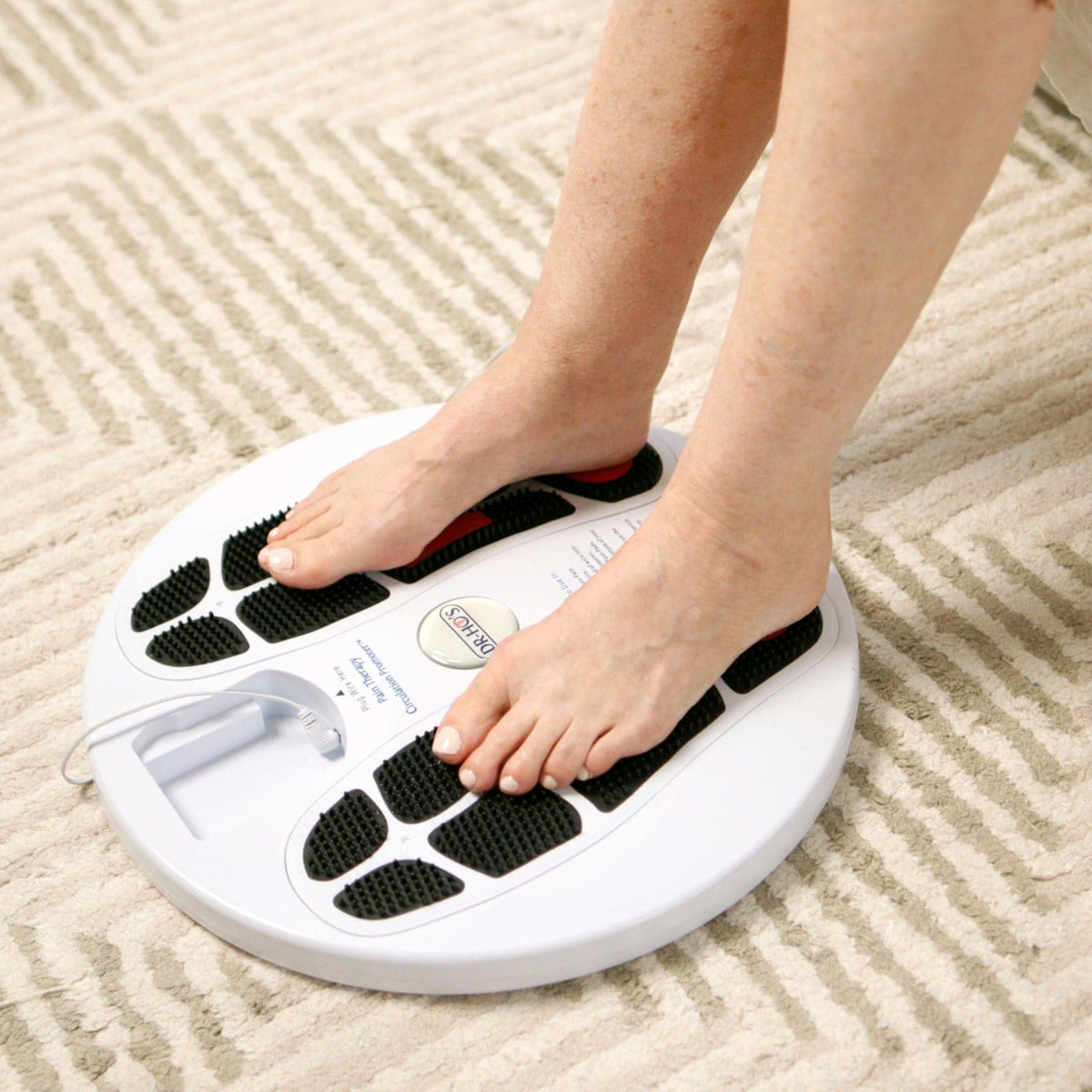
For individuals with chronic foot pain, those relying on painkillers for a long time, or people with diabetic neuropathy, TENS (Transcutaneous Electrical Nerve Stimulation) is a drug-free treatment option commonly used by physical therapists in Hong Kong. By stimulating nerves with low-frequency electrical currents, it achieves a triple effect of pain relief, muscle relaxation, and improved blood circulation.
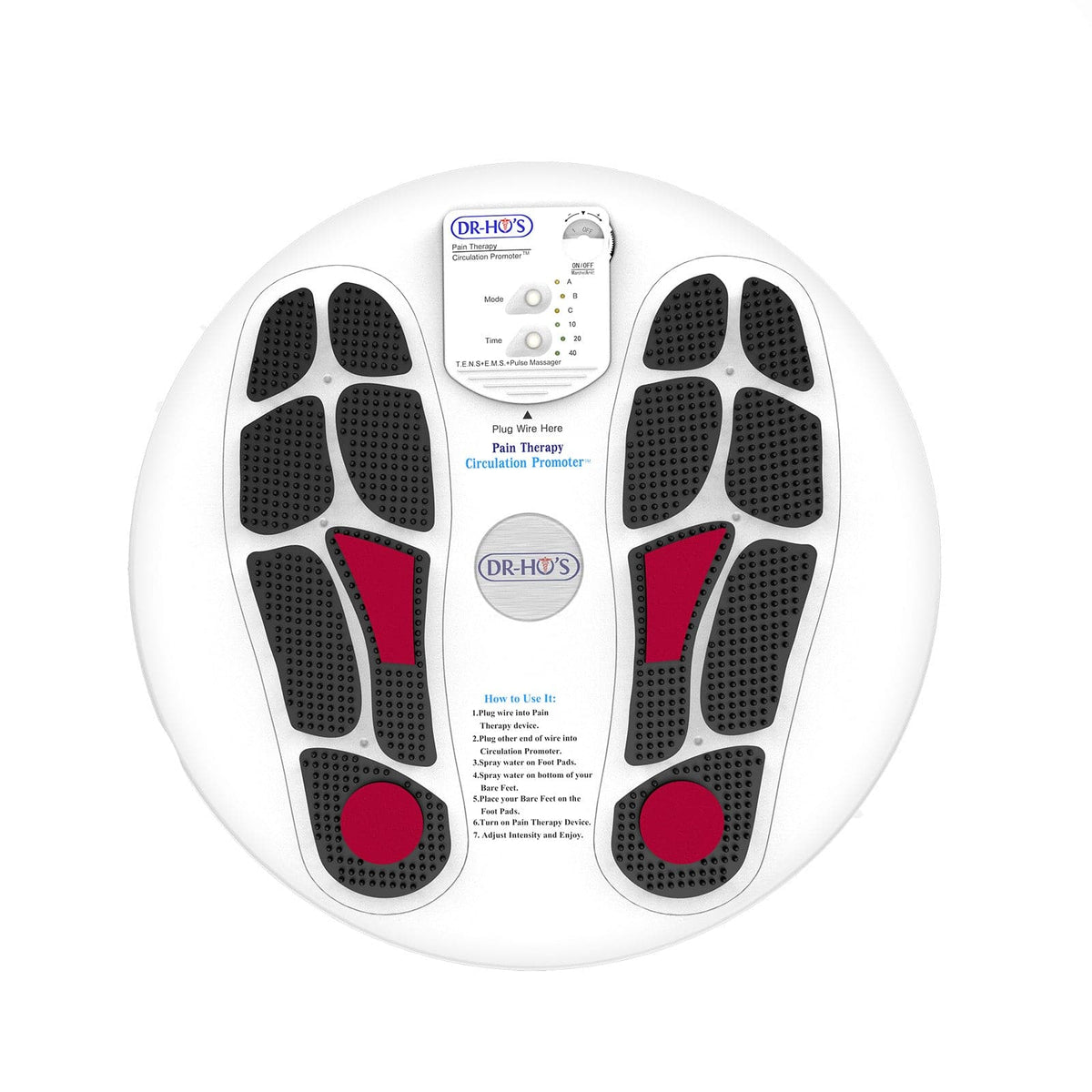
5 Key Features of DR-HO'S Circulation Promoter
- 25 Treatment Modes: Covers various techniques like massage, acupuncture, Tui Na, and relaxation.
- Circulation Enhancing Technology: Improves blood circulation in the lower extremities, especially suitable for individuals with diabetic feet and varicose veins.
- Integrated Foot Pad Design: Simply step onto the foot pads to use, no need to attach electrode pads.
- 15 Intensity Levels: Adjust from gentle massage to deep treatment as needed.
- FDA Registered Medical Device: Clinically proven to be safe and effective.
Usage Recommendations
- Frequency: 1-2 times daily, 15-20 minutes each time.
- Timing: Best before sleep at night, can relax muscles and improve sleep.
- Applicable Conditions: Plantar fasciitis, heel pain, metatarsalgia, diabetic foot numbness, fatigue from prolonged standing.
- Contraindications: Pacemakers, pregnant women, broken skin, deep vein thrombosis.
🎁 Act Now: DR-HO'S Hong Kong Official Discount
Enter discount code NOMOREPAIN to enjoy 13% off, free shipping on orders over HK$1,500.
👉 Learn more about DR-HO'S Circulation Promoter View the Pro version CPP →
Where to seek treatment for foot pain in Hong Kong? Medical resources + fees
Medical resources for treating foot pain in Hong Kong are mainly divided into the following 4 categories, choose according to severity and budget:
| Category | Suitable Conditions | Reference Fees (HKD) | Waiting Time |
|---|---|---|---|
| General Outpatient Clinic (GOPC) | Mild pain, initial examination | $50 (eligible persons) | Same day / Next day |
| Public Orthopedics (Referral) | Chronic pain, requires X-ray / MRI | $135 (first visit) / $80 (follow-up) | 1-3 years for stable new cases |
| Private Physiotherapist | Plantar fasciitis, muscle strain | $600-1,200 / session | Within 1-2 weeks |
| Podiatrist | Flat feet, bunions, custom insoles | $800-1,500 / session | Within 1-2 weeks |
Data reference: HA 2026 public fees, Hong Kong Physiotherapy Association, Hong Kong Podiatry Association industry reference. Actual fees may vary by medical institution.
6 warning signs for medical attention: When to see a doctor for foot pain?
If you experience any of the following symptoms, you should immediately stop self-treatment and seek medical attention as soon as possible:
- Severe pain persists for more than 1 week, and painkillers cannot relieve it.
- Significant swelling, deformity, or bruising of the foot (may indicate a fracture).
- Redness, swelling, warmth, and pain in the joint, accompanied by fever (may indicate an acute gout attack or infection).
- Persistent numbness or reduced sensation in the foot (may indicate diabetic neuropathy or nerve compression).
- Waking up at night due to pain, or pain even at rest (may be a sign of severe inflammation or tumor).
- Foot ulcers or wounds that do not heal (especially for diabetics, may indicate diabetic foot).
Preventing foot pain: 5 daily habits

Habit 1: Choose the right shoes
For shoes worn for long periods daily (work shoes, athletic shoes): choose those with arch support, 1-1.5 cm toe box width, shock-absorbing soles, and 2-3 cm heels. Replace every 6-12 months.
Habit 2: Control weight (BMI 18.5-23)
The standard BMI for adults in Hong Kong is 18.5-23 (Asian standards are lower than Western standards). Weight loss significantly reduces pressure on the feet; losing 5 kg can greatly lower the risk of plantar inflammation.
Habit 3: Daily foot stretches (5 minutes)
Before getting out of bed in the morning and before going to sleep at night, perform foot rolls with a ball, towel toe pulls, and calf stretches. Consistent adherence can significantly reduce the risk of plantar fasciitis recurrence.
Habit 4: Avoid prolonged standing or walking
For every 1 hour of standing, sit and rest for 5-10 minutes and perform simple toe flexion and extension exercises. This is especially important for occupational groups in Hong Kong such as salespersons, chefs, nurses, and teachers.
Habit 5: Regular foot examinations (for diabetics)
Diabetic patients are advised to have at least one podiatric examination annually to detect neuropathy, circulatory problems, and skin ulcers early. The Hong Kong Hospital Authority's Diabetes Centre provides relevant services.
Frequently Asked Questions FAQ
Q1: Which specialist should I see for foot pain?
Depending on the type of symptoms: an orthopedic doctor handles bone, joint, and ligament problems (e.g., fractures, bone spurs, flat feet); a physiotherapist treats muscle and fascia pain (e.g., plantar fasciitis, muscle strain); a podiatrist specializes in foot structure, custom insoles, and bunions; an endocrinologist addresses gout and diabetic foot-related issues. If unsure, you can first consult a general practitioner (GP) or GOPC for assessment and referral.
Q2: How long does plantar fasciitis take to heal? Can it be cured?
Plantar fasciitis is a chronic inflammation. Normal recovery time is 6-18 months, requiring comprehensive treatment such as arch support insoles, stretching exercises, weight loss, and TENS electrical therapy. About 90% of patients can alleviate symptoms through conservative treatment, but the recurrence rate is 30-40%, necessitating long-term maintenance of good foot care habits. A small number of severe cases may require PRP injections, extracorporeal shockwave therapy, or surgery.
Q3: Where can I buy quality arch support insoles in Hong Kong?
There are three main channels in Hong Kong: (1) Chain pharmacies like Mannings, Watsons, and CRCare sell general arch support insoles from brands like Scholl, priced at HK$120-280; (2) Sports stores such as Asics, New Balance, and Brooks offer specialized sports insoles for HK$300-800; (3) Professional podiatry clinics provide 3D foot scans and custom orthotics, ranging from HK$1,500-3,500, offering the highest accuracy and suitable for individuals with flat feet, high arches, or diabetic feet.
Q4: Can I hike or run with foot pain?
During the acute phase (severe pain, redness, swelling, warmth), you must stop exercising and follow the RICE principle. Individuals with chronic foot pain can continue exercising, but need to be mindful of: reducing intensity by 30-50%, using well-cushioned athletic shoes, wearing arch support insoles, avoiding hard surfaces (switch to running on tracks or grass), and performing adequate warm-up and stretching before and after exercise. If pain worsens immediately during exercise, you must stop and seek medical evaluation.
Q5: Is TENS electrical therapy effective for foot pain?
TENS (Transcutaneous Electrical Nerve Stimulation) is an FDA-approved, commonly used pain relief method by physiotherapists in Hong Kong. It uses low-frequency electrical currents to stimulate nerves, activating the "gate control theory" to block pain signals, and promoting blood circulation and muscle relaxation. It is particularly effective for plantar fasciitis, chronic heel pain, and diabetic neuropathy. Home devices, such as DR-HO'S Pain Therapy System, can be used for 15-20 minutes daily with no drug side effects. However, it is contraindicated for individuals with pacemakers, pregnant women, broken skin, or deep vein thrombosis; consult a doctor before use.
Q6: What causes severe pain in the first step out of bed in the morning?
This is a classic symptom of plantar fasciitis. The principle is: during sleep, the plantar fascia is in a relaxed and contracted state. When you suddenly put weight on it with the first step in the morning, the inflamed tissue is stretched, causing severe pain. The pain lessens after a few steps (as the fascia gradually "stretches out"). Solutions: (1) Do toe towel stretches for 1-2 minutes before getting out of bed; (2) Place slippers by the bed (to avoid stepping directly on hard ground barefoot); (3) Seek medical attention if symptoms persist for more than 2 weeks; (4) Using arch support insoles and TENS electrical therapy can enhance effectiveness.
Conclusion: Don't ignore the warning signs of foot pain
The feet are the only organs in the human body that touch the ground and bear the entire body's weight. Foot pain not only affects mobility but can also lead to long-term postural compensation, causing knee pain, hip pain, and lower back pain. Hong Kong urbanites often stand for long periods and have varying exercise levels, making foot health even more important.
This guide provides a comprehensive framework for managing foot pain, but each individual's situation is different. If you experience persistent pain that affects daily life, please consult a healthcare professional.
📚 Further Reading